Registration and Breakfast
Arrival, name badges, breakfast, and informal networking in the Canada Room & Council Chamber.
Arrival, name badges, breakfast, and informal networking in the Canada Room & Council Chamber.

Welcome
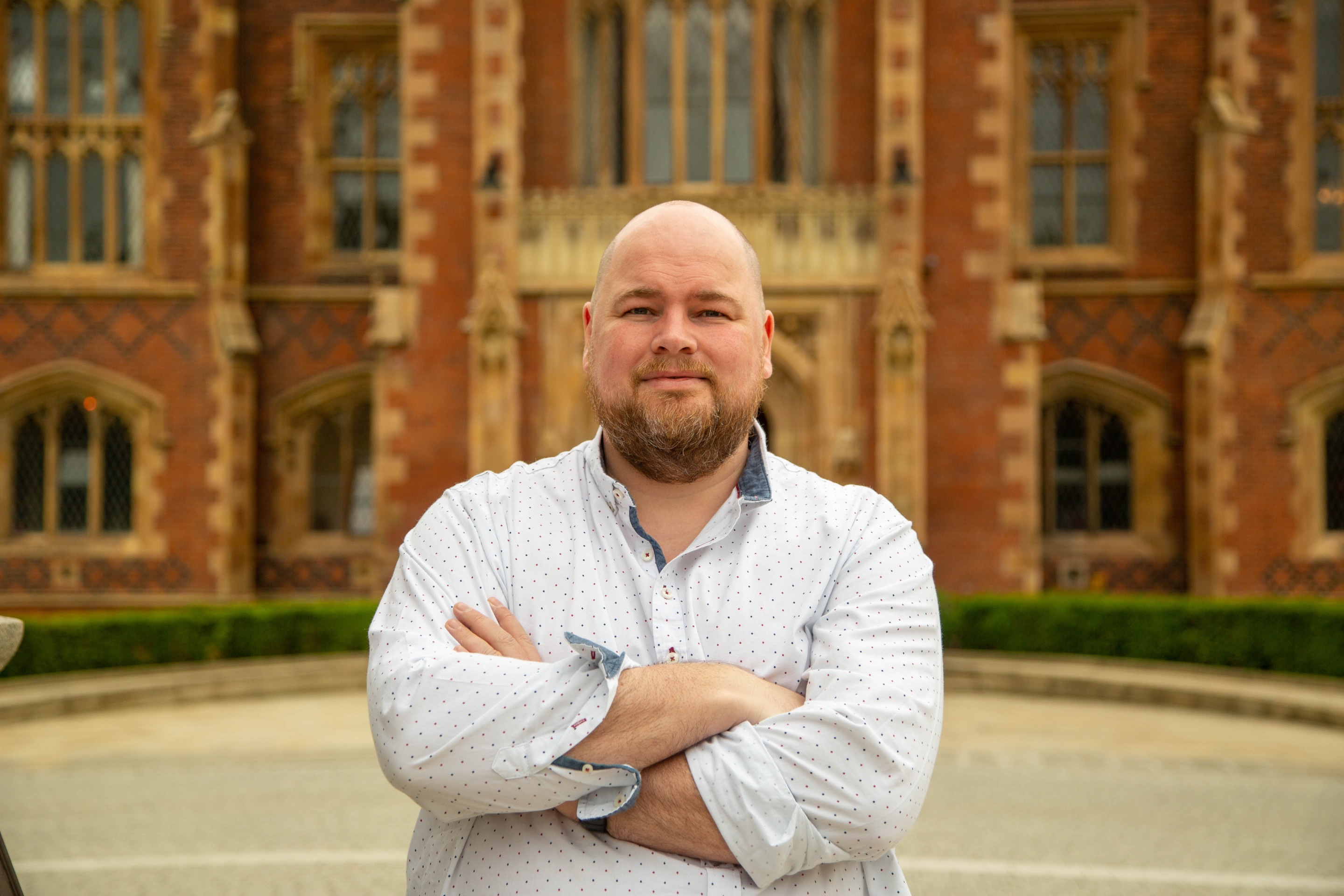
Andrew McDowell is a Professor of Computing and Digital Education and Director of the Centre for Education and Society within the School of Electronics, Electrical Engineering and Computer Science at Queen's University Belfast. Through his current and previous roles, he has helped shape strategic direction across teaching enhancement, curriculum innovation, outreach and civic engagement within computing and engineering.
He brings substantial experience of leading strategic and operational change within higher education, particularly in relation to programme design, accreditation alignment and large-scale curriculum reform. His work has focused on strengthening educational quality and enhancing the student experience, including the integration of emerging digital pedagogies such as AI into teaching and learning.
Professor McDowell maintains an active teaching and scholarship profile in STEM education, with particular interests in widening access to higher education and supporting learner success through data driven, student focused interventions. He works closely with colleagues, schools and external partners to strengthen widening participation, international collaboration and the societal impact of computing and digital education.

Talk 1
Joanne McGovern is a Technology and Design teacher and Digital Auditor at St. Patrick’s Academy, Dungannon, where she teaches across GCSE, AS, and A2 levels and leads staff development in digital tools and AI integration. Current completing doctoral research at Ulster University, exploring how generative AI shapes knowledge construction in educational contexts, this research sits at the intersection of pedagogy, learning theory, and emerging technology. Working to support practitioners across sectors in thinking critically and practically about how AI is designed into learning. Research titled Scaffold or Substitute? Generative AI, Knowledge Construction, and Pedagogical Design in Built Environment Higher Education.
Talk 2
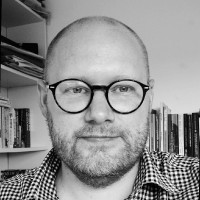
Peter Hutchinson is the Director of Curriculum Reform and TransformED Implementation at the Department of Education.Peter has worked in the Department of Education since 2016 across a number of roles including the Strategic Review of the Northern Ireland Curriculum, and the Independent Review of Education. Peter is currently the Director of Curriculum Reform, leading the design and development of a new statutory curriculum framework for Northern Ireland. Peter is also responsible for the development of new literacy and numeracy strategies, the review of the RE syllabus and the implementation of the TransformED Strategy. Peter will be explaining the background to the TransformED reform agenda, what it involves and what it means for curriculum.
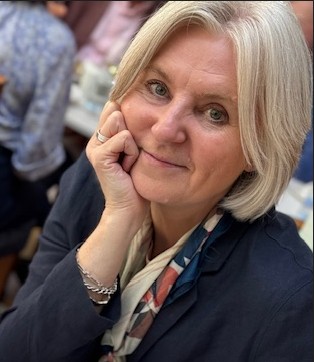
Averil Morrow has been an enthusiastic advocate for the use of digital technology in education since the mid 1980s, when she became one of the first teachers in Northern Ireland to integrate a BBC microcomputer into her classroom practice. This commitment to innovation continued throughout her career.
As the former Head of Service for Professional Learning and Development in the Education Authority, and subsequently Acting Assistant Director of Education, Averil worked extensively with schools and teachers to maximise the educational potential of digital technologies. She played a significant role in developing the business case for EdIS, the managed service for schools and served as a member of the EdIS Programme Board during her tenure in the Education Authority.
In her role within the Education Authority, Averil also held responsibility for the AmmA Centre in Armagh, one of three Creative Learning Centres in Northern Ireland part funded by Northern Ireland Screen. This work involved leading and managing programmes for teachers and young people in digital creativity, including film making, animation, game design, music production, digital manufacture, and computational thinking.
Refreshments and informal discussion.

Talk 3
Garth started coding as a teenager in the 1980s. He became a full-time developer during the Celtic Tiger years before pivoting into education and consultancy. After many years as a freelancer, he led the training team at Instil Software for a decade before joining the Advocacy Team at JetBrains. Over the years he's taught well over 1000 courses, workshops, and seminars - using everything from CORBA to Kotlin. Currently Garth is the Learning Consultant at Liberty IT, where he helps over 1000 technical staff (spread over three sites) maintain and extend their skill base. Garth is a prolific speaker, writer and co-organiser of several local conferences and meetups. When not at the whiteboard he teaches martial arts, lifts heavy weights and fights nerf wars with his kids.
Talk 4
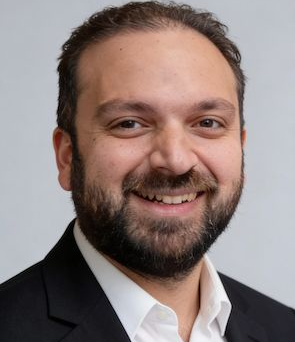
Dr. Kamal is a Lecturer in Computer Science (AI), a Principal Investigator, and an elected Senate Member at Ulster University. He received his B.Sc. in Computer Science from Iqra University Islamabad in 2016, his M.Sc. in Computer Science from COMSATS in 2019, and his Ph.D. in Computer Science from Ulster University in 2024. Serving as a PI and Co-I on multiple research initiatives supported by the EPSRC, DfE, and the PBIAA, his research focuses on the intersection of Secure AI, Trustworthy Learning Technologies, and physiological machine learning.In the domain of higher education, Dr. Kamal develops trustworthy AI frameworks to navigate the integration of generative models. He recently led EPSRC-funded research to enhance stylometric techniques for detecting AI-generated text, which included creating a first-of-its-kind dataset containing both human and AI-generated essays from the same participants. This work underpins his development of a stylometric agentic feedback framework that moves beyond binary AI-text detection to foster metacognitive reflection and authentic student authorship.Within physiological computing, he designs robust defense mechanisms for consumer wearables. His recent contributions include the AutoSync framework, which protects multimodal biosignal learning from temporal desynchronization, and FG-DualNet architectures that proactively defend stress-detection models against training-time data poisoning. Furthermore, his work in Secure AI includes the development of privacy-preserving, federated reinforcement learning architectures for delay-aware cyber threat detection in IoT-UAV intelligent transportation systems.
Lunch and networking conversations.
Panel Discussion
Panel discussion drawing together themes from the morning talks and wider forum questions.
Focus Groups
Structured focus group discussions to capture priorities, ideas, and next steps.
Closing remarks and final reflections.