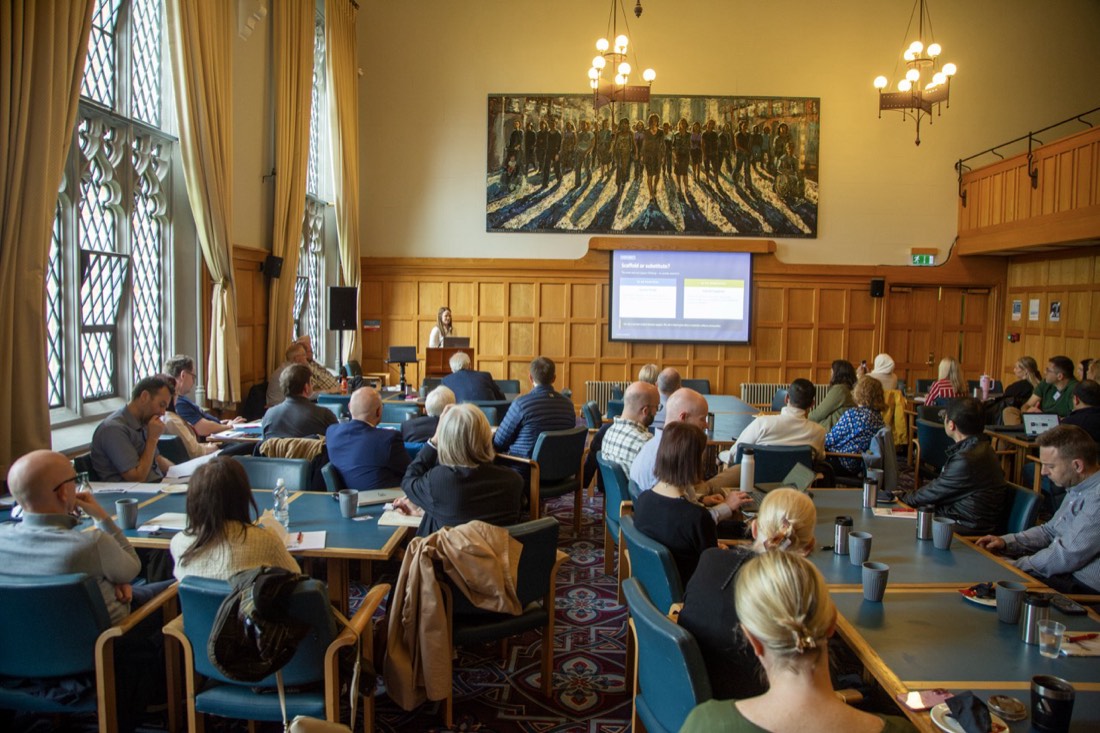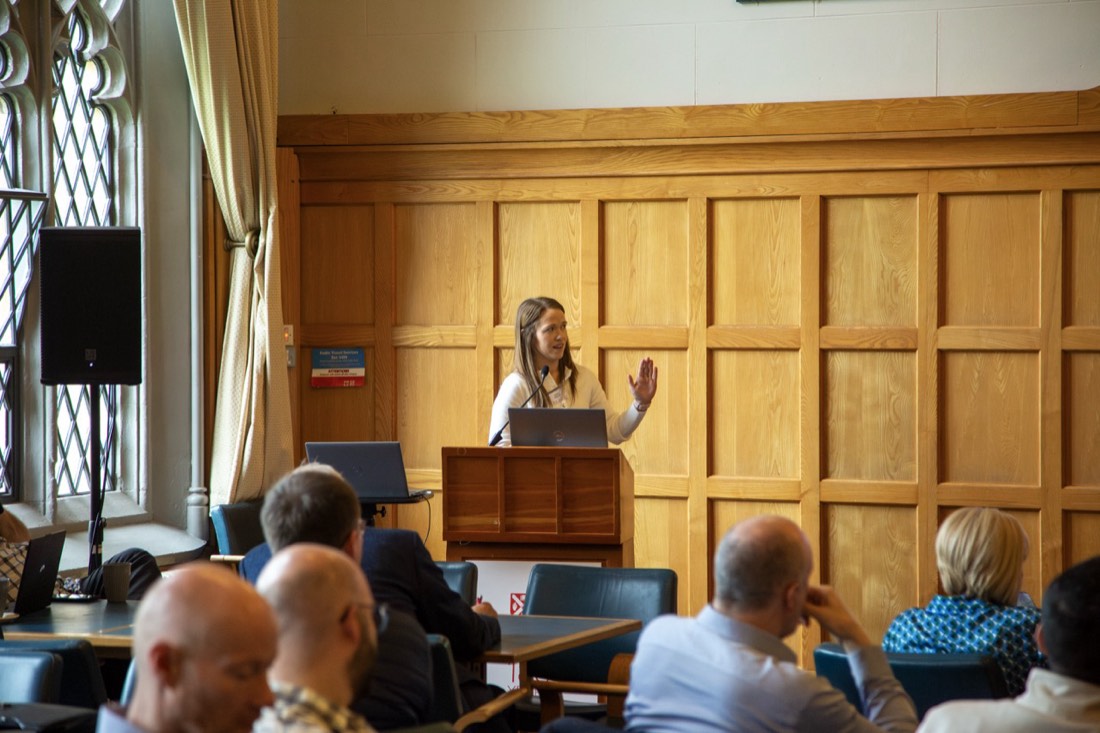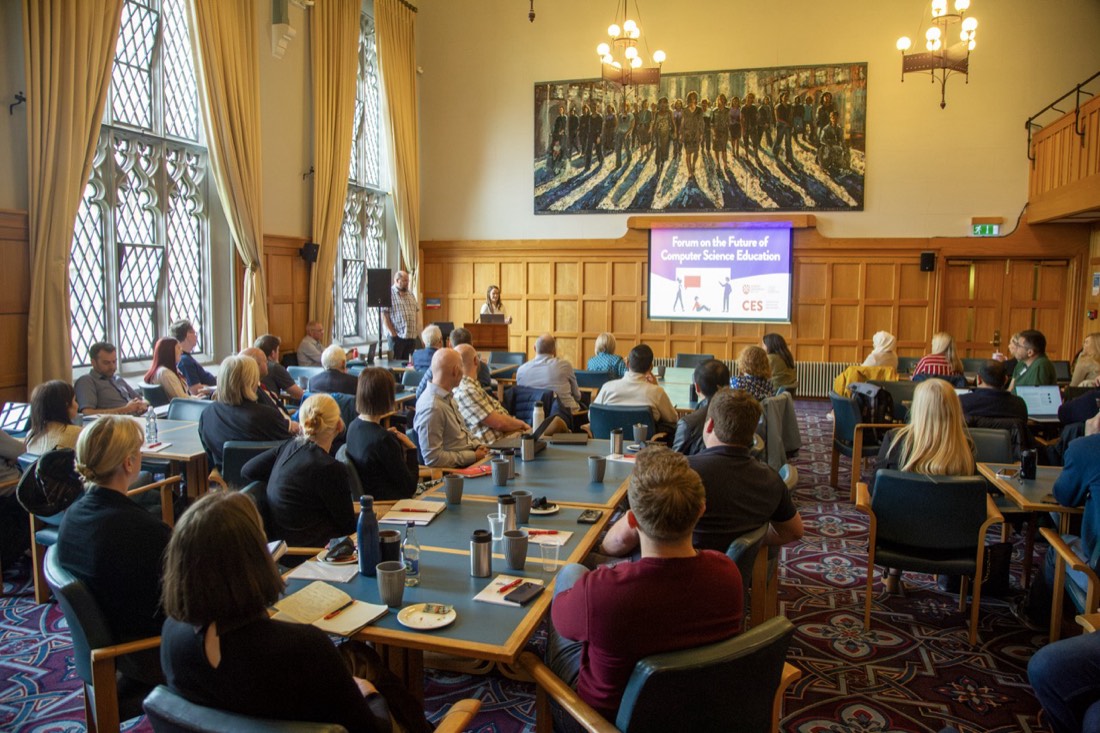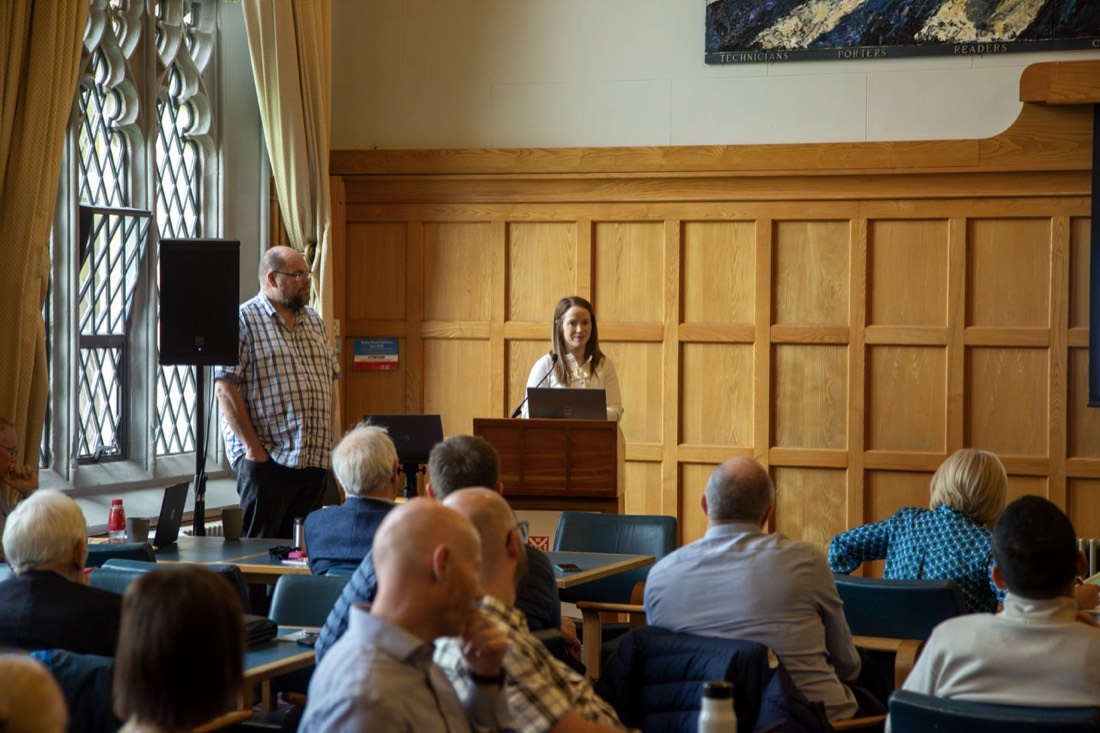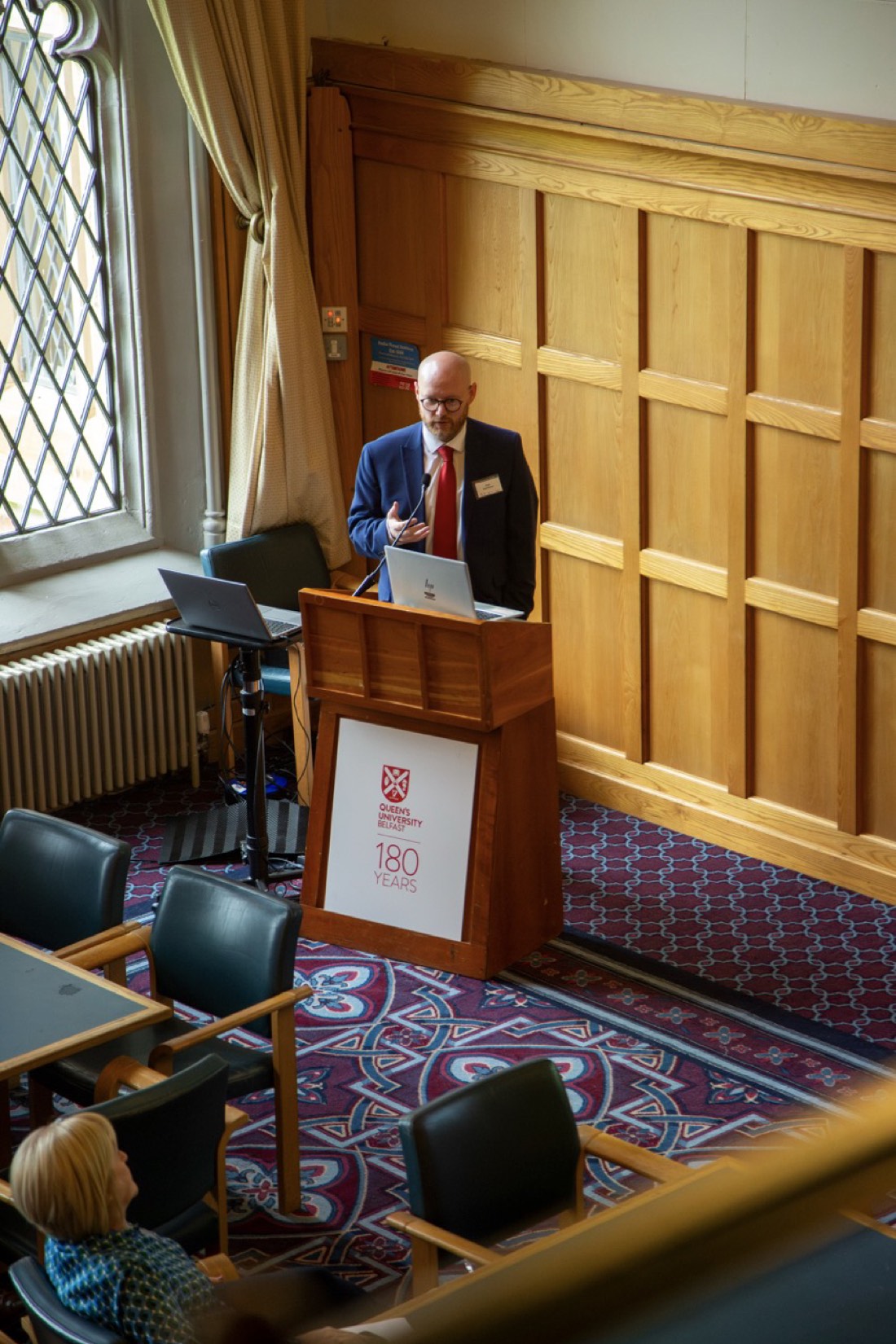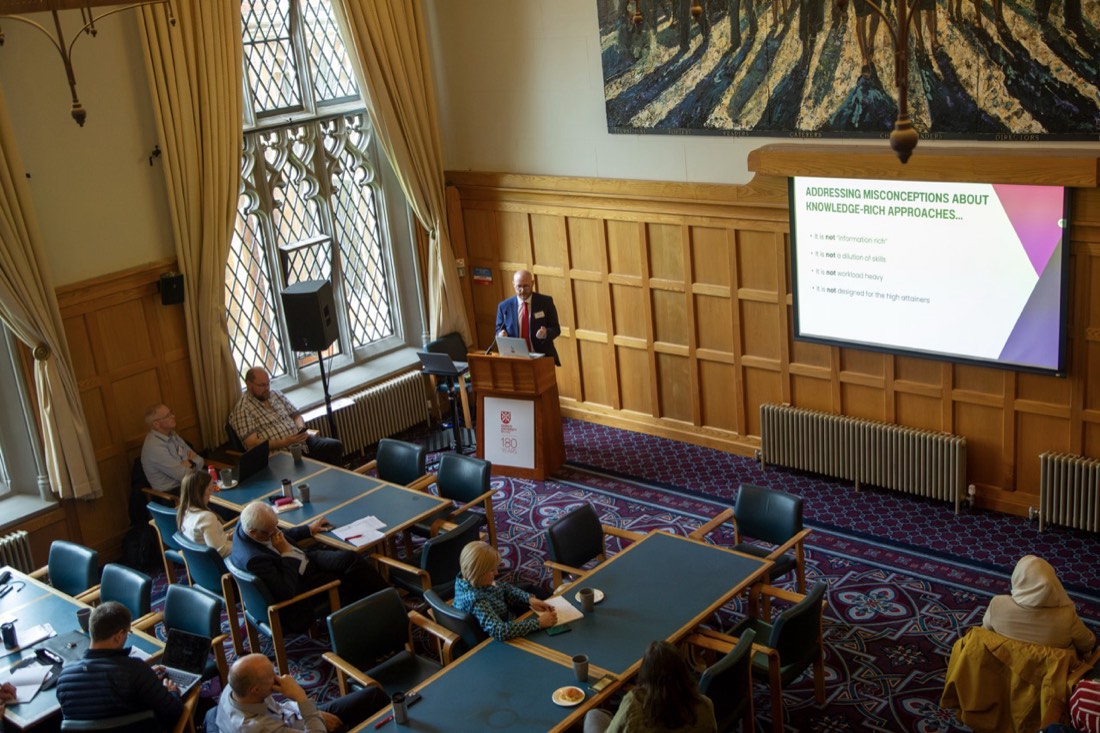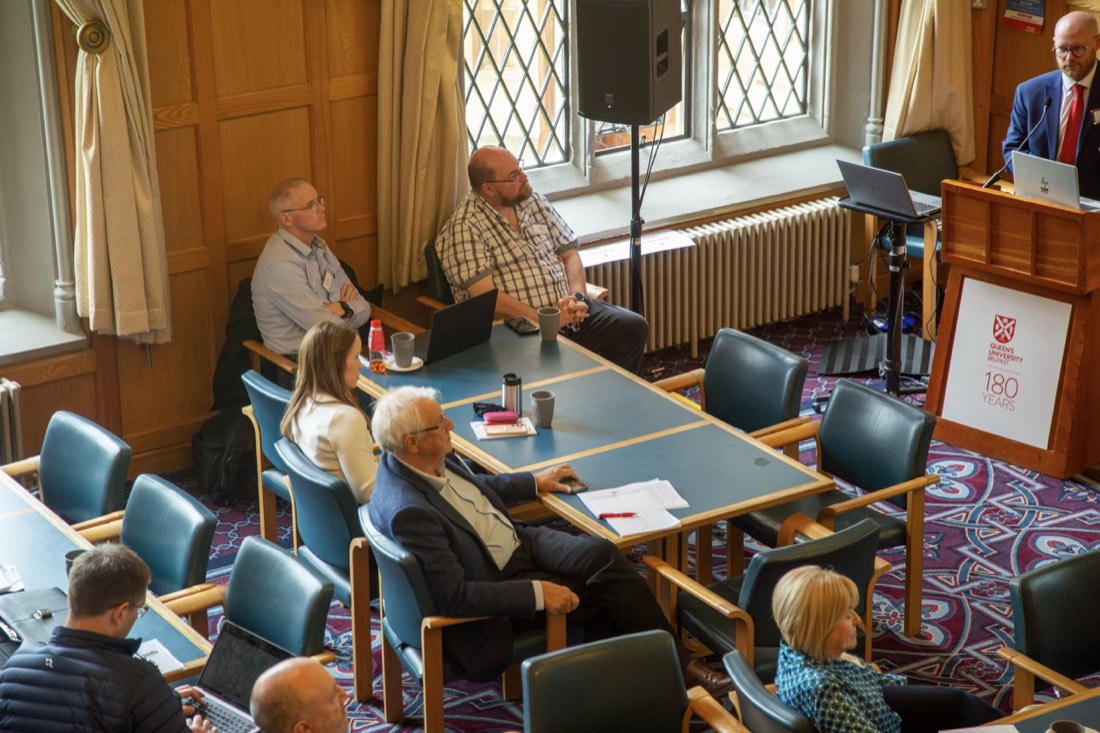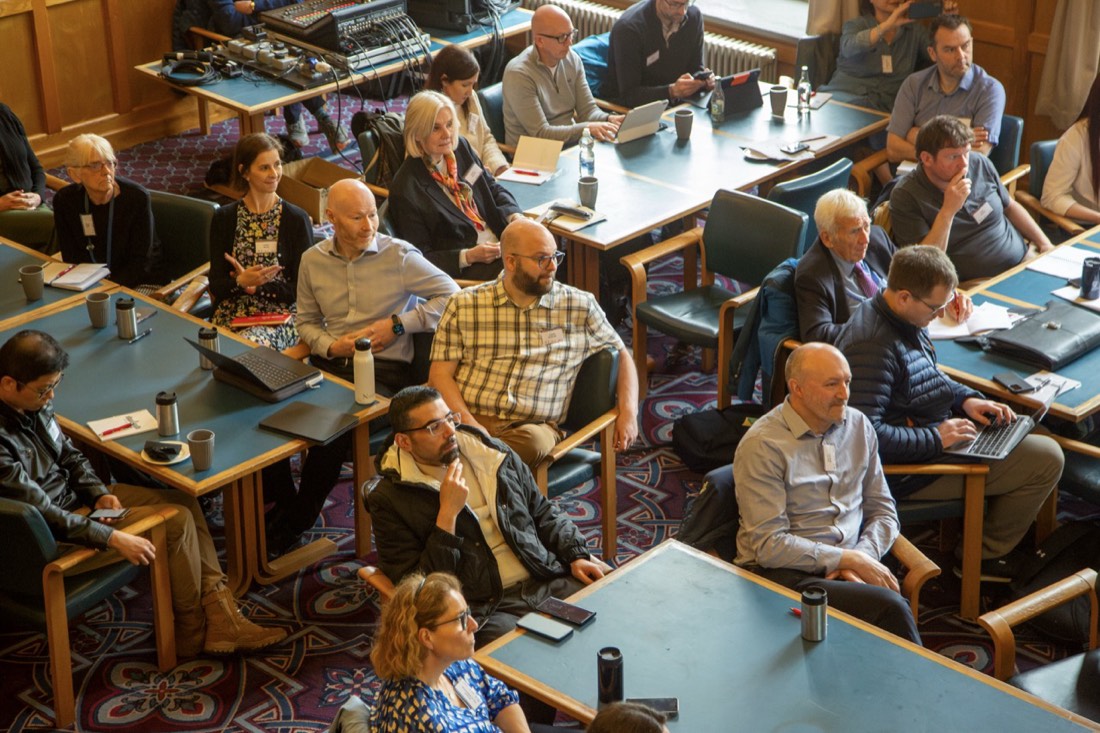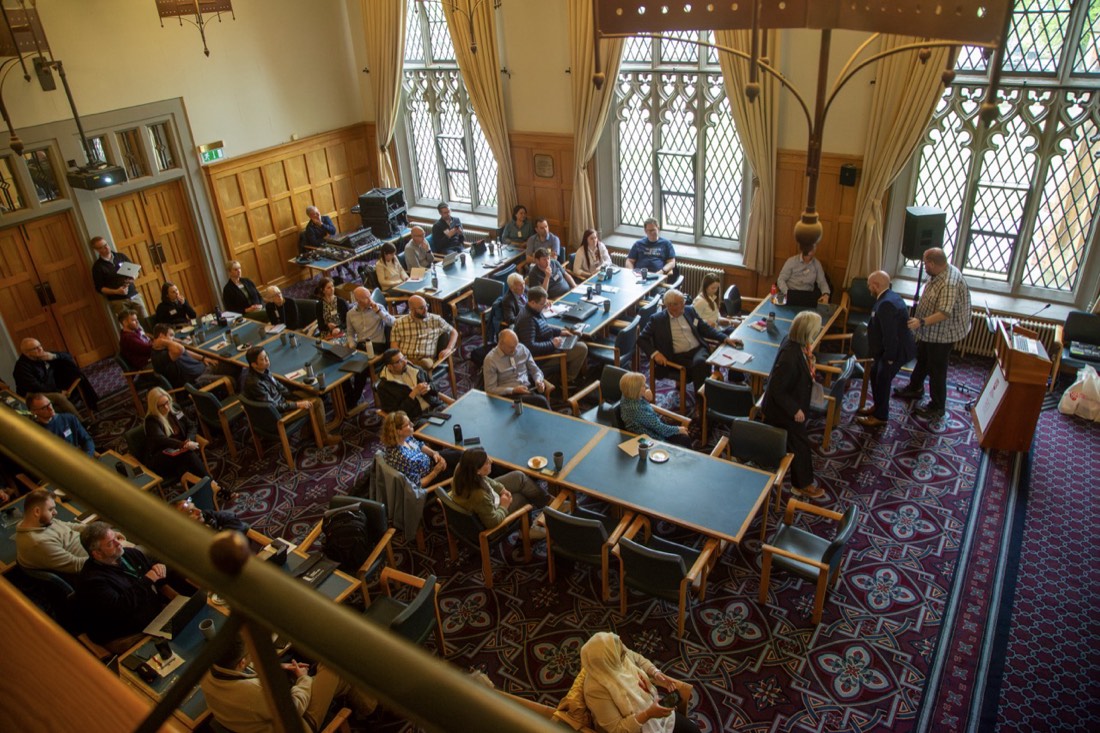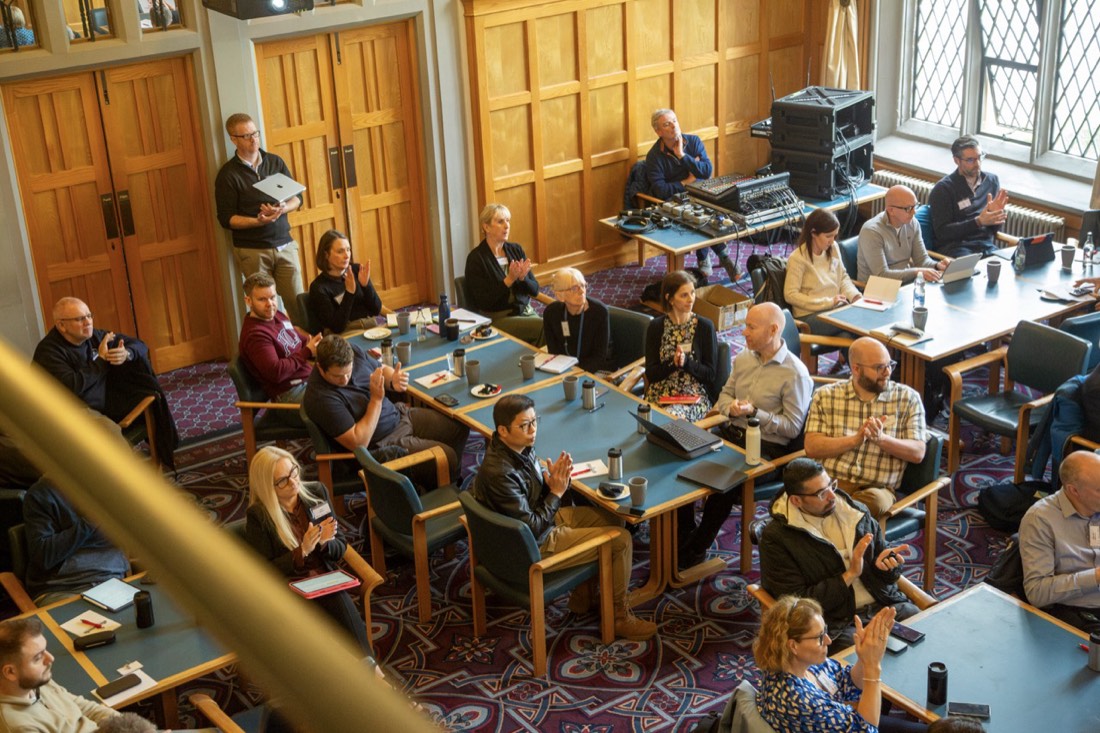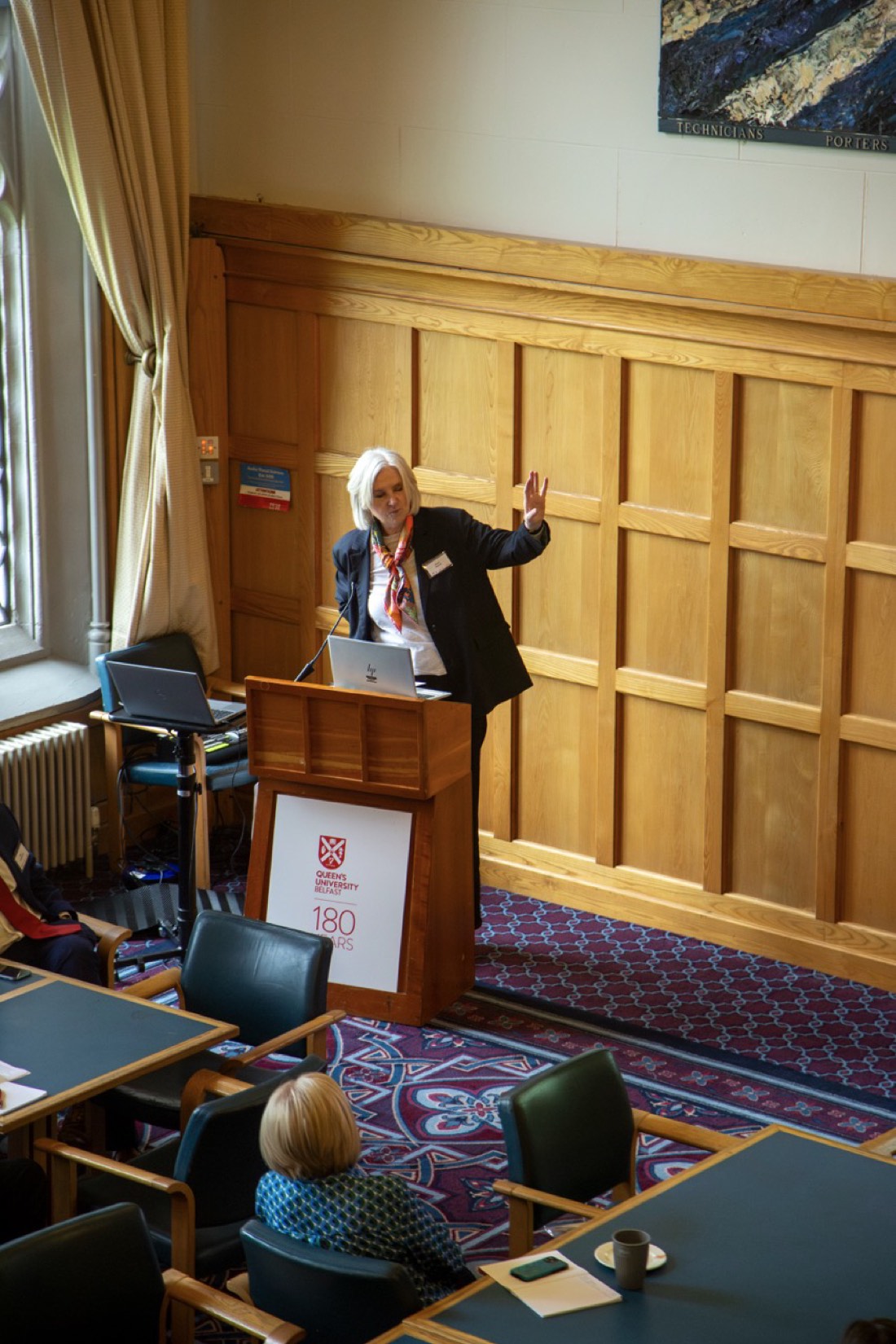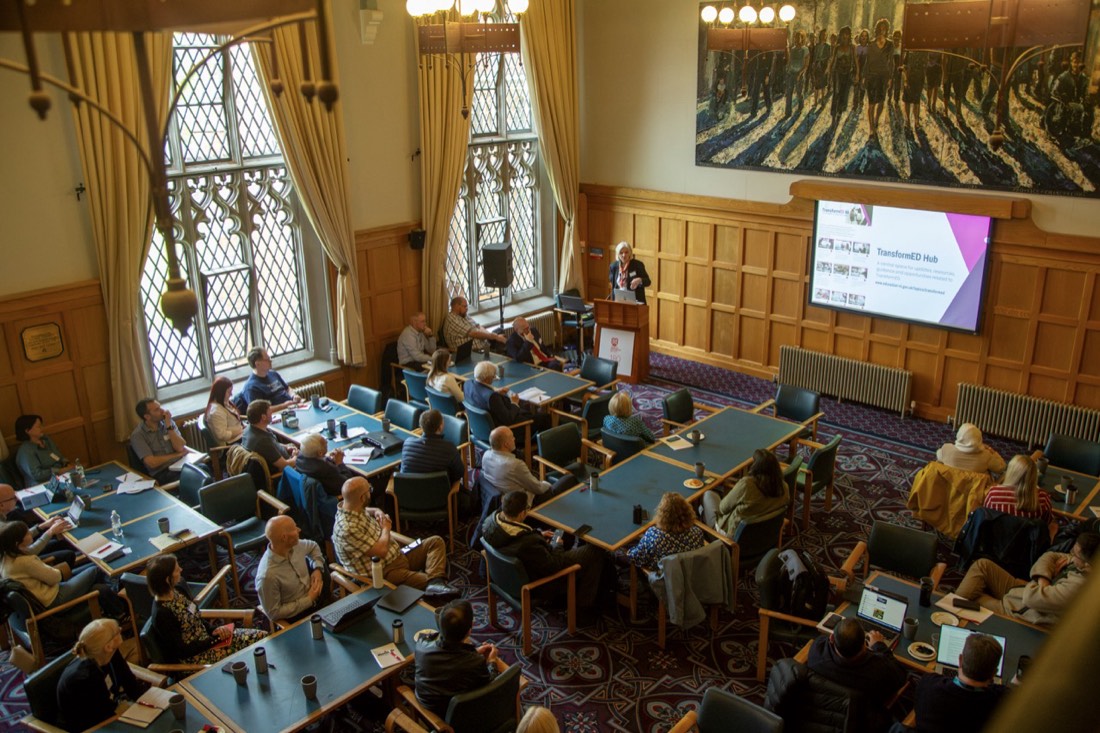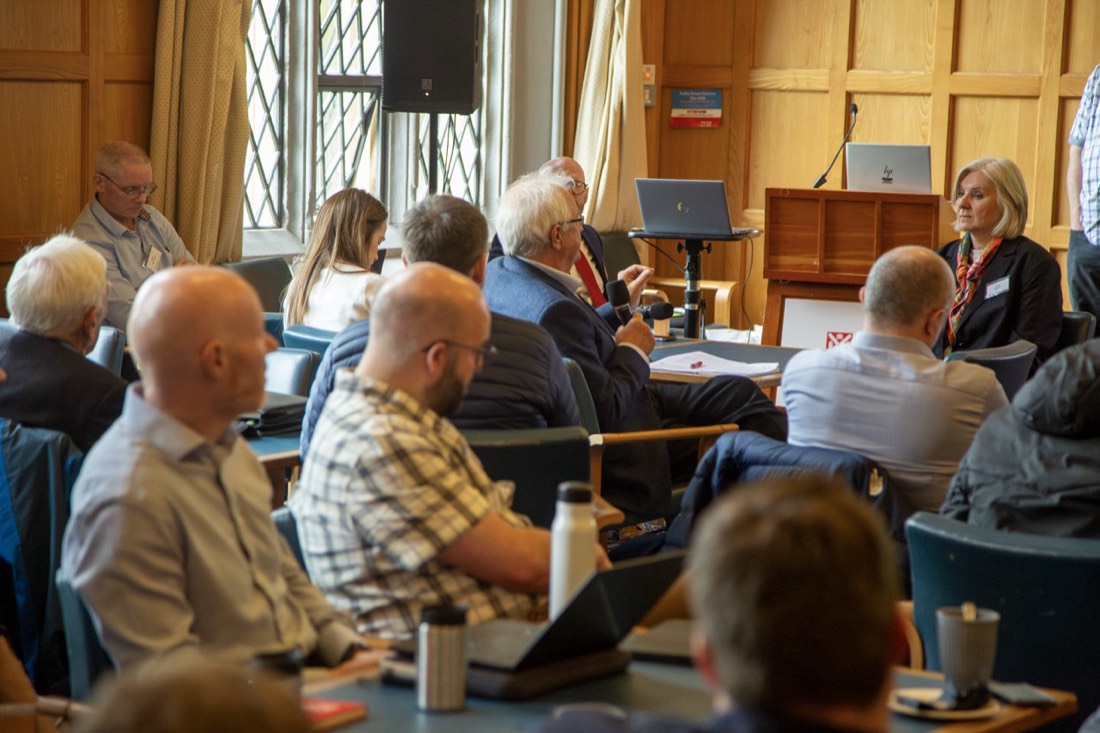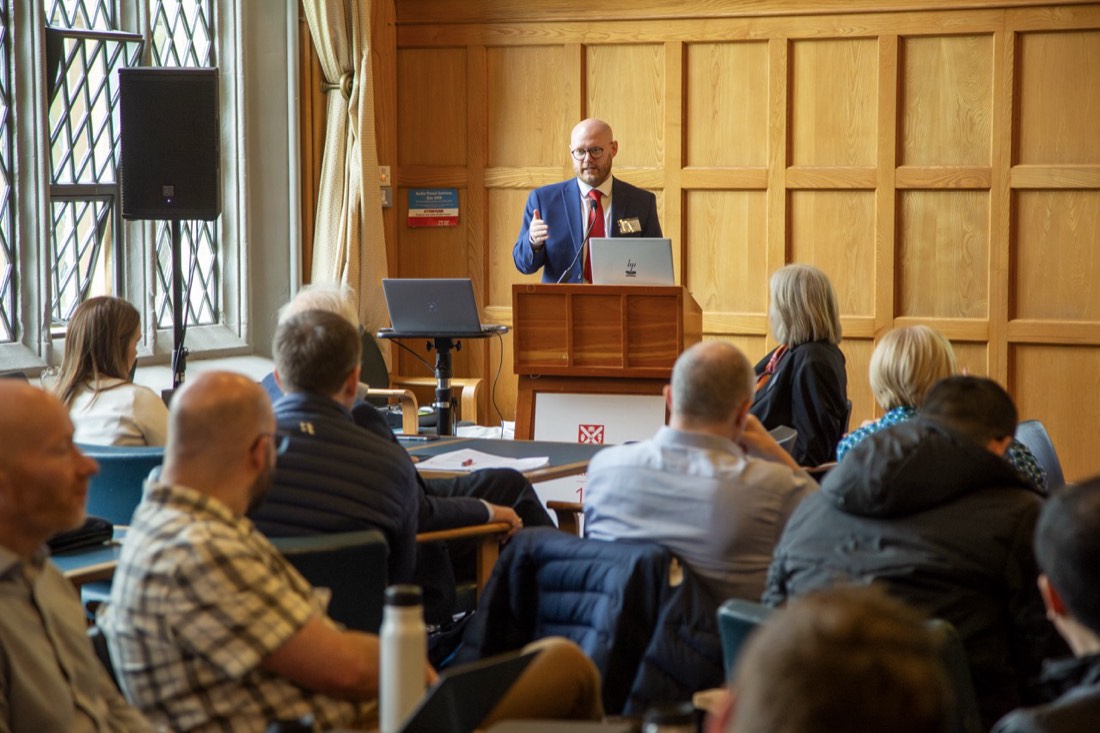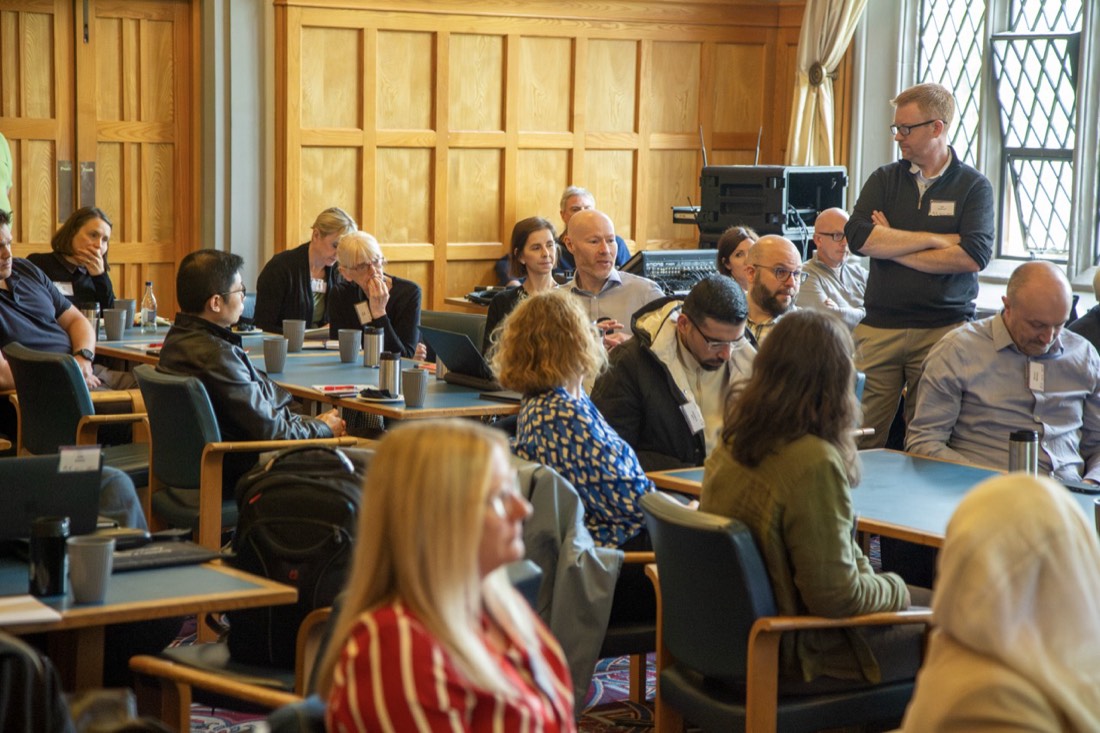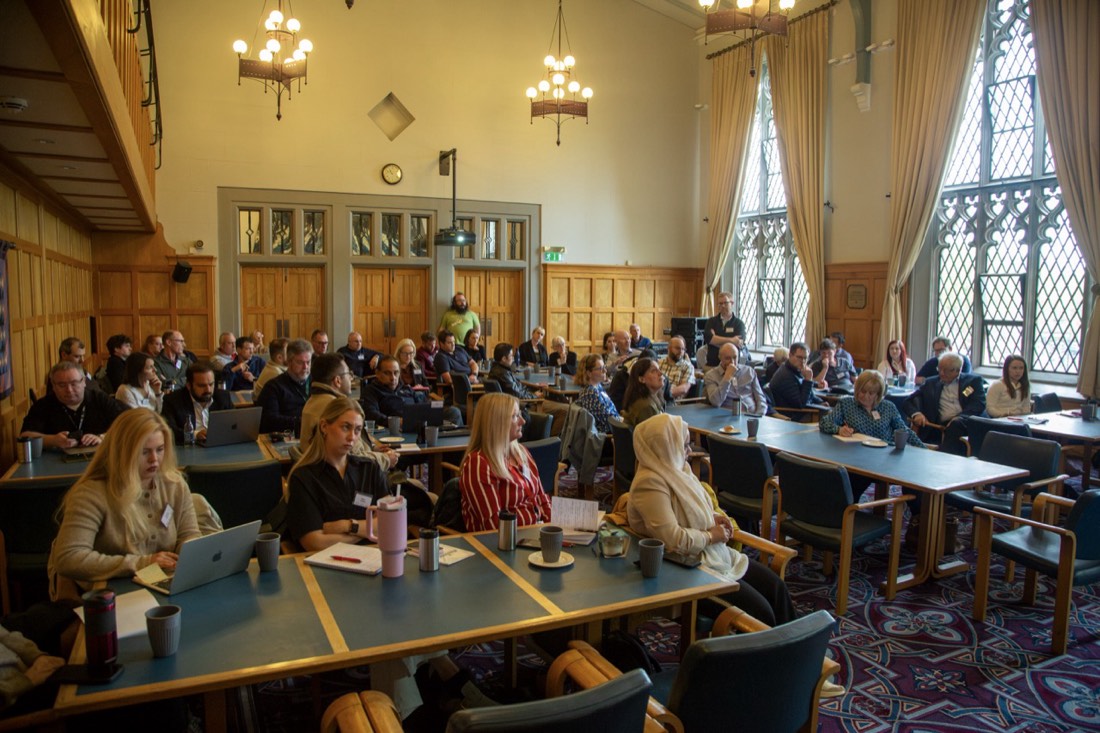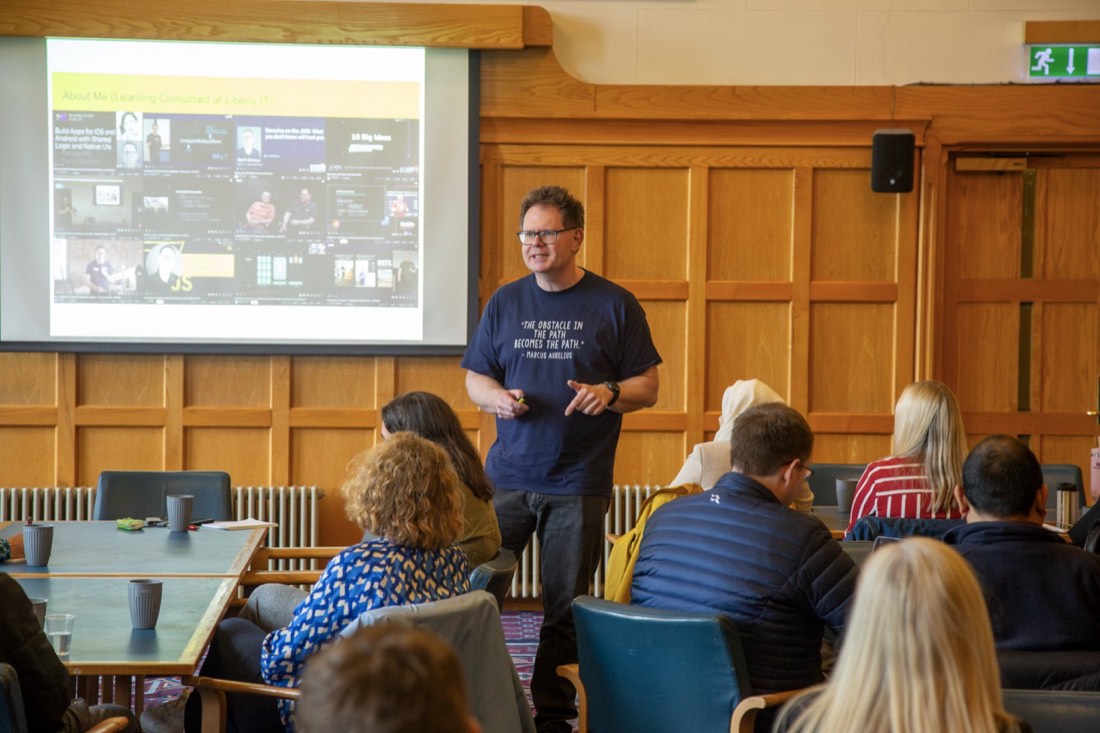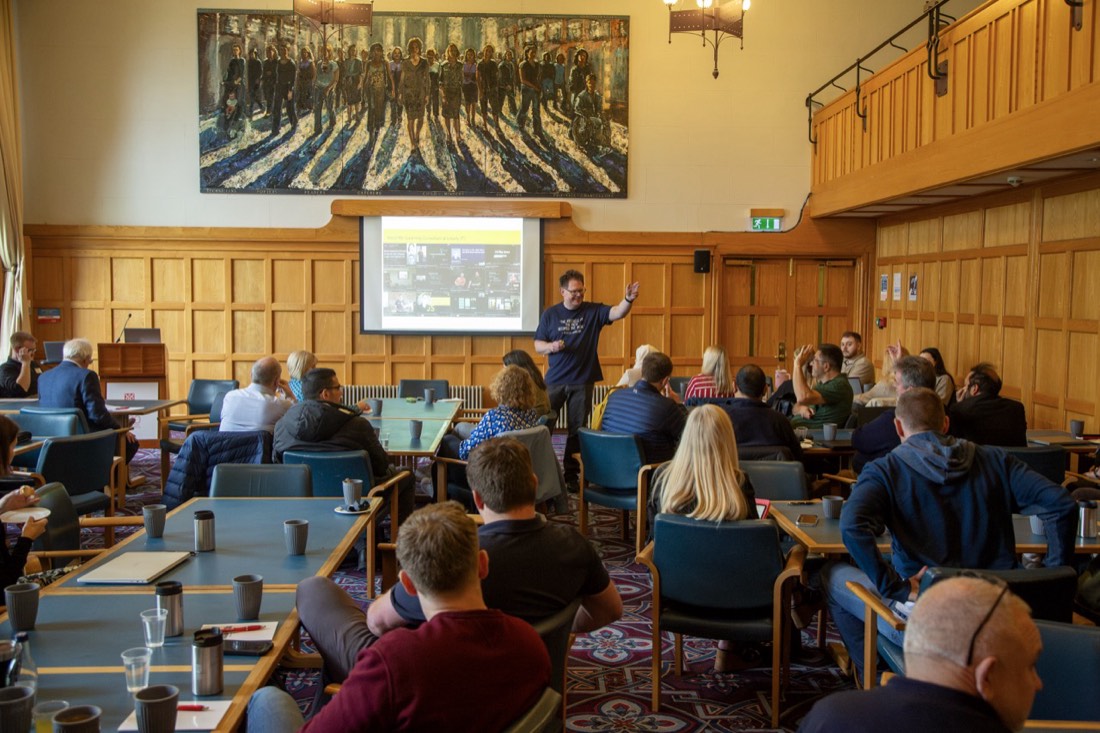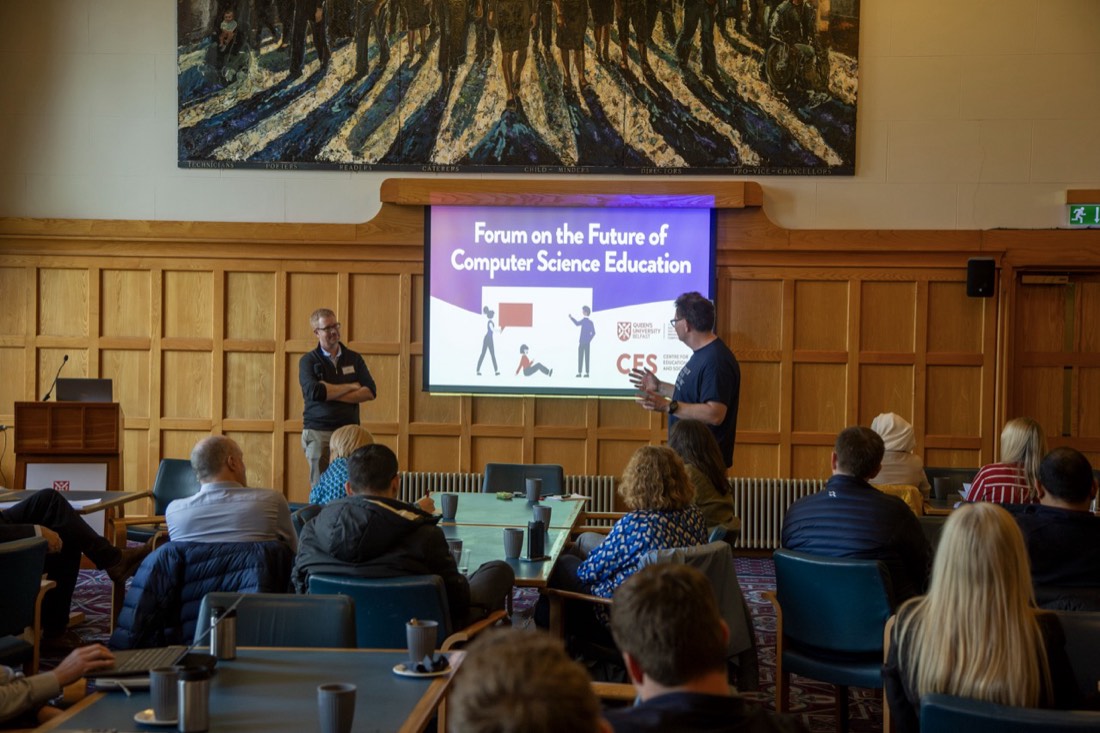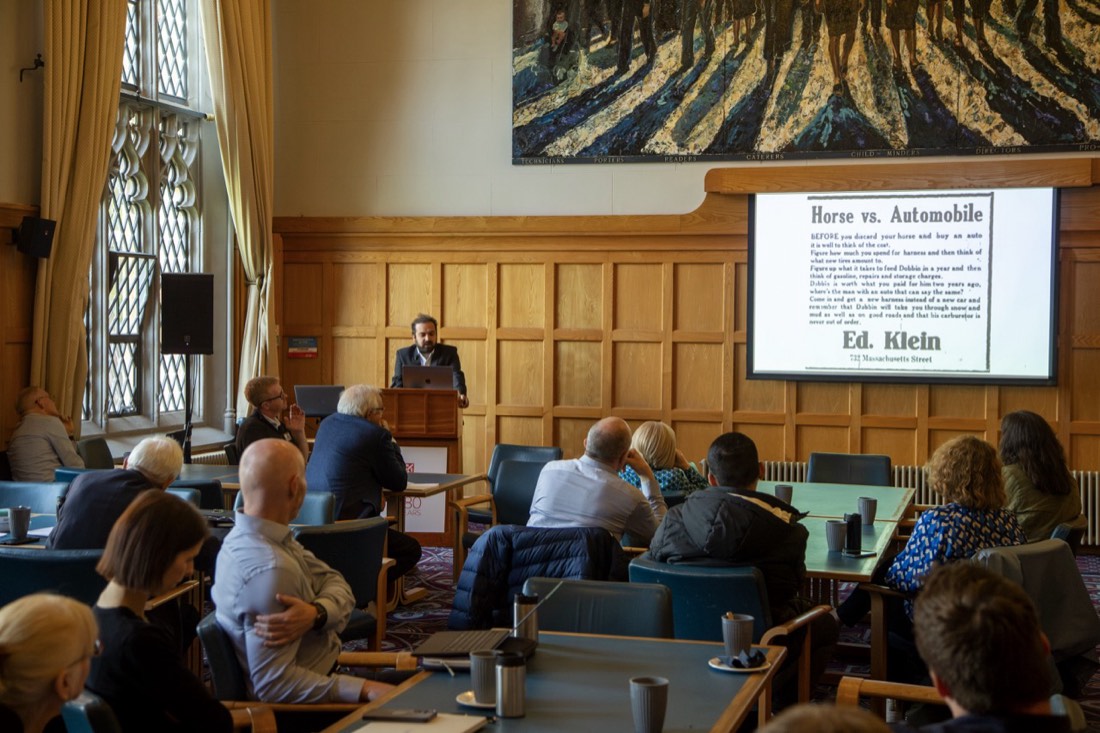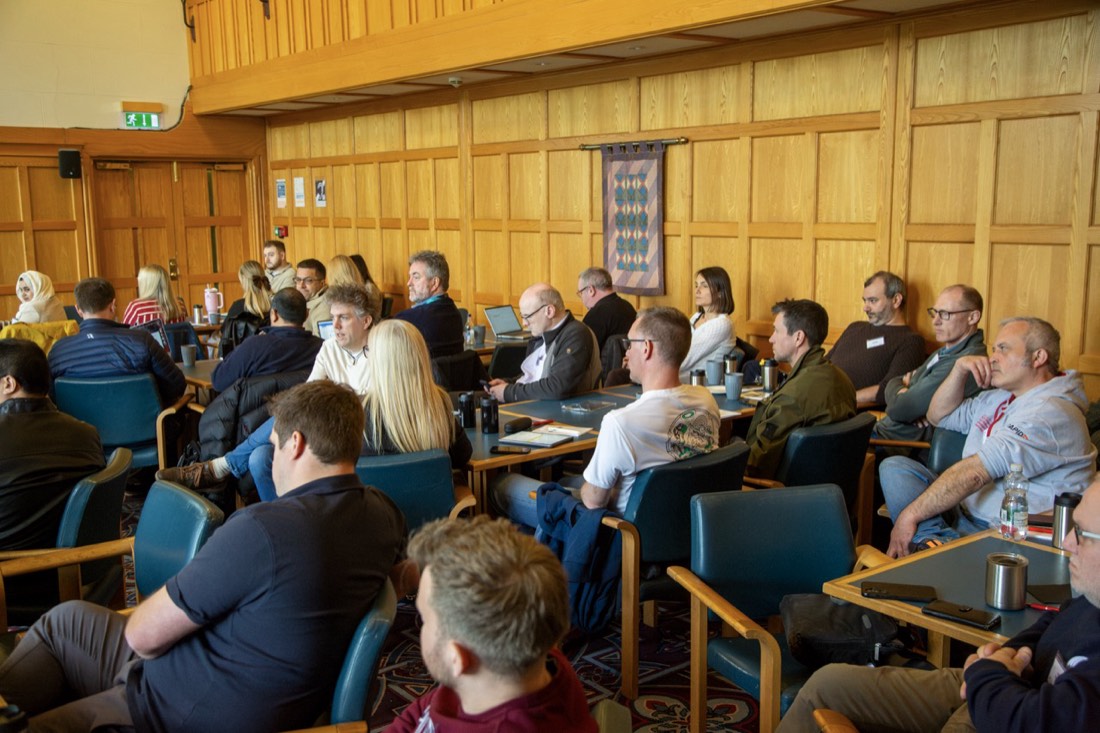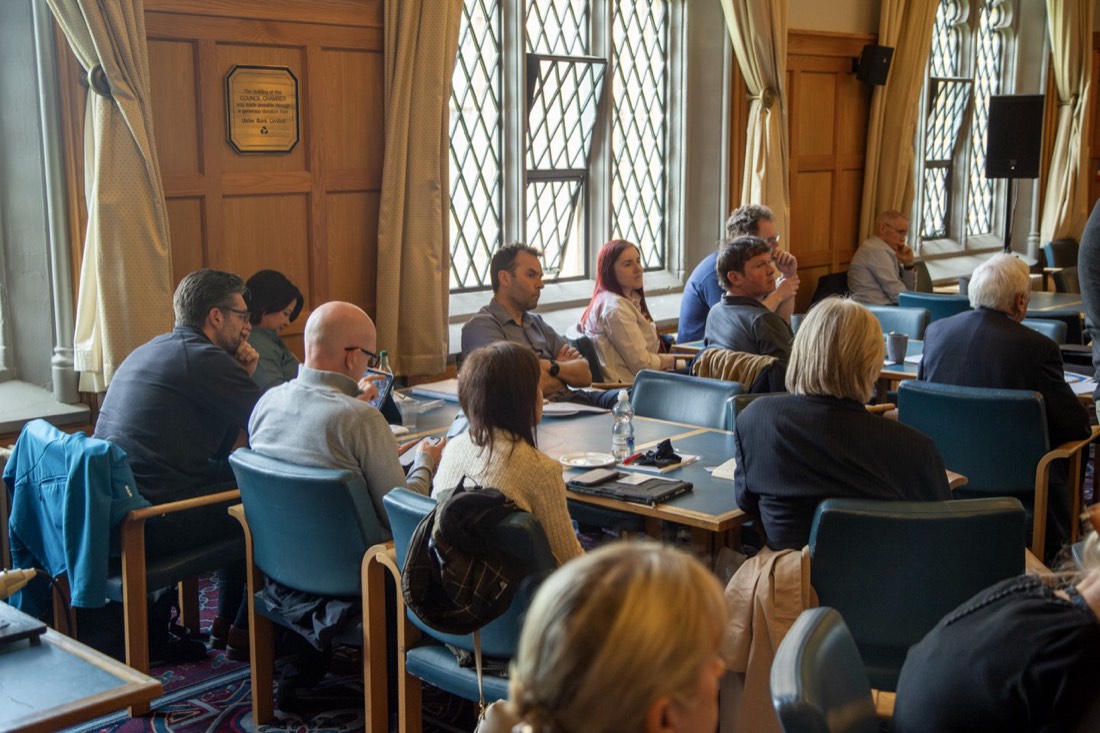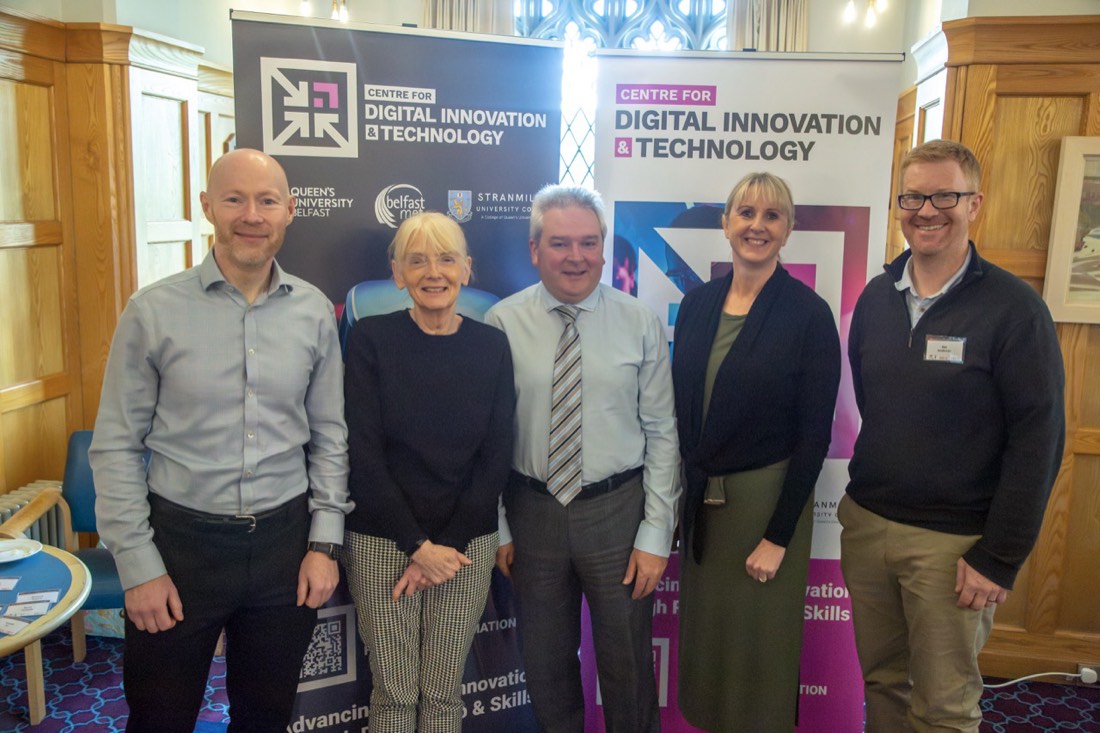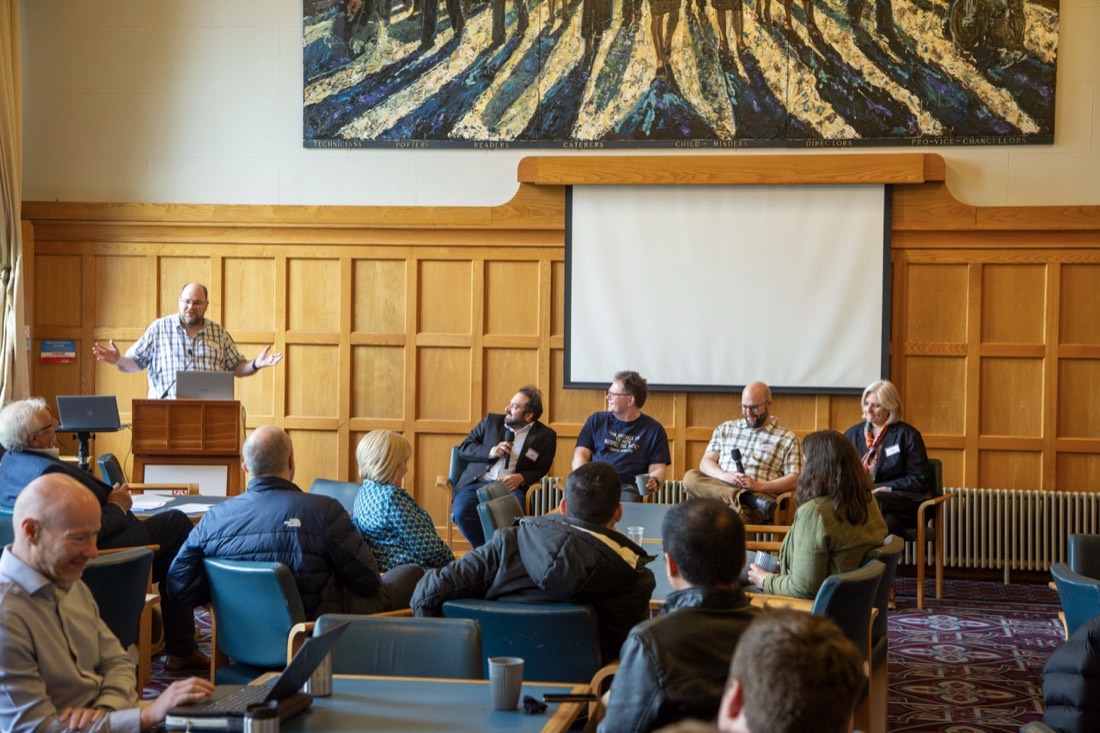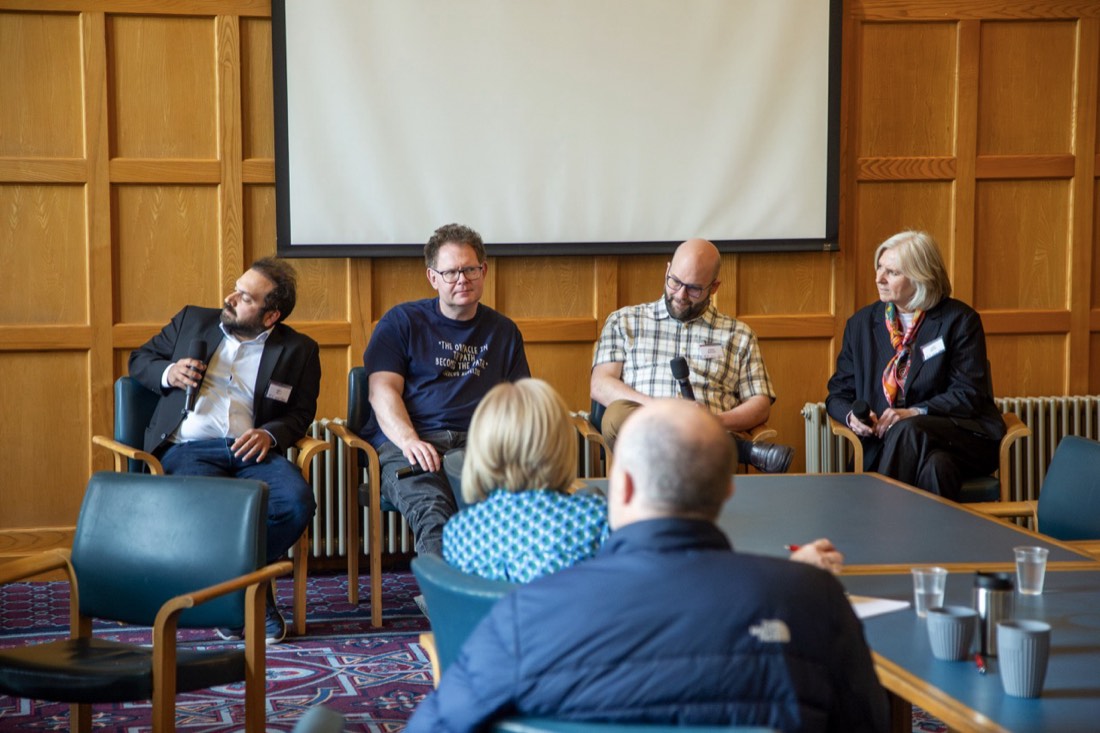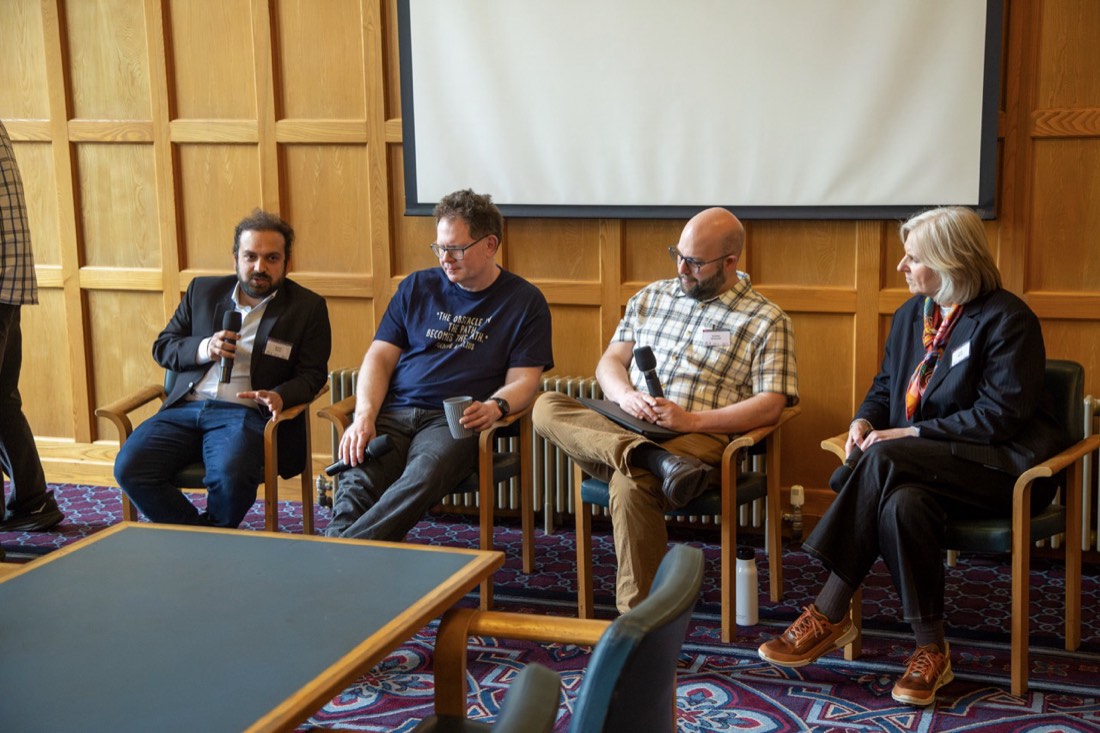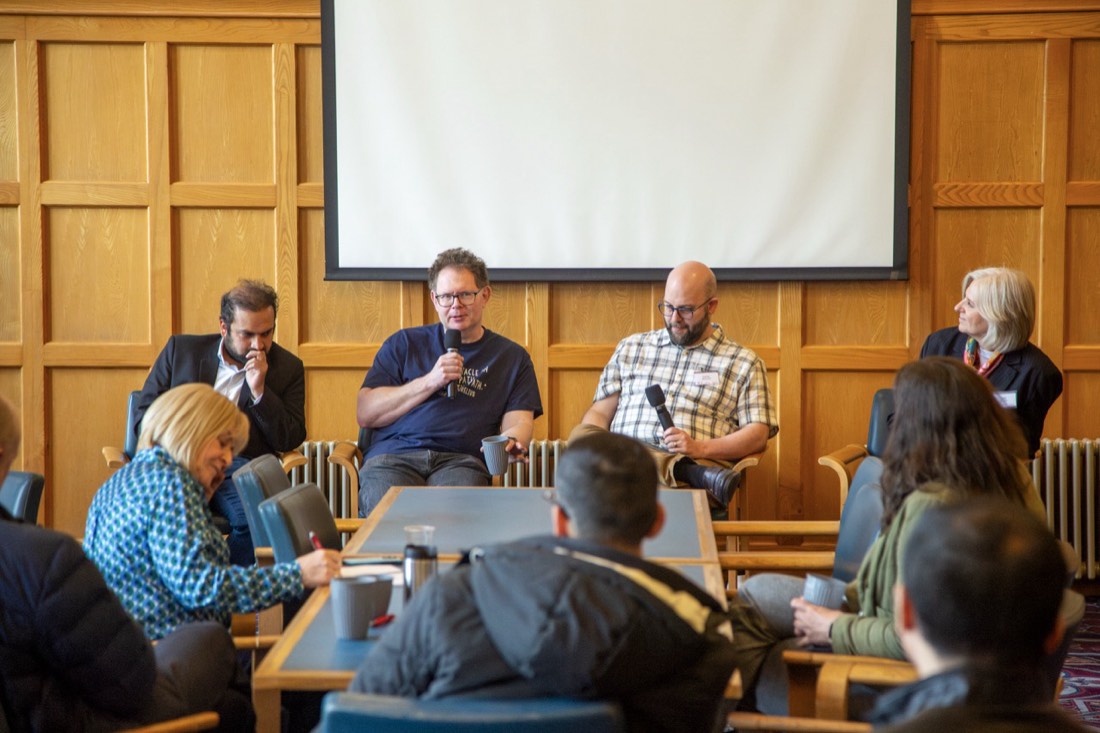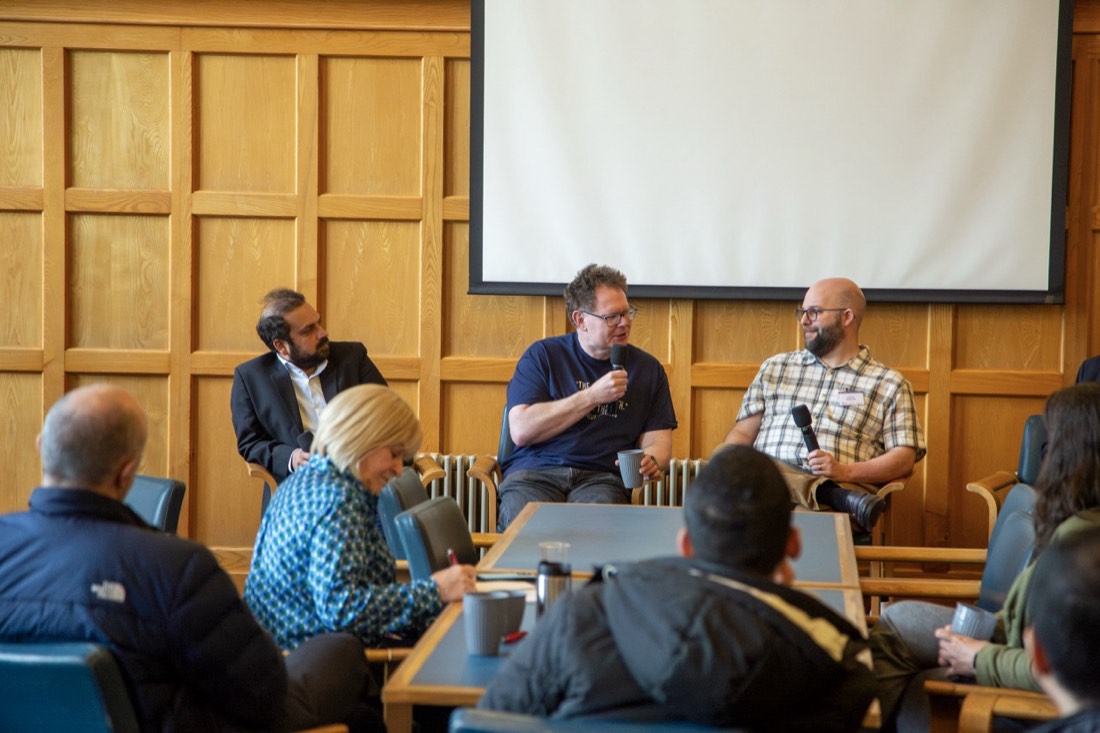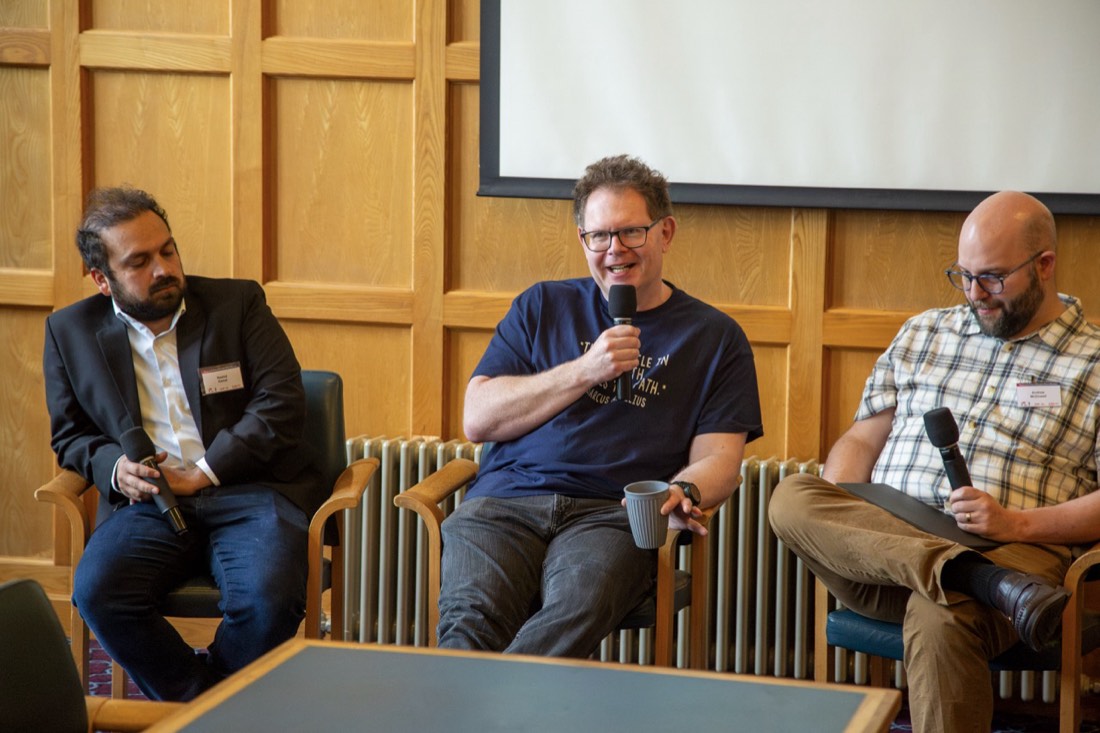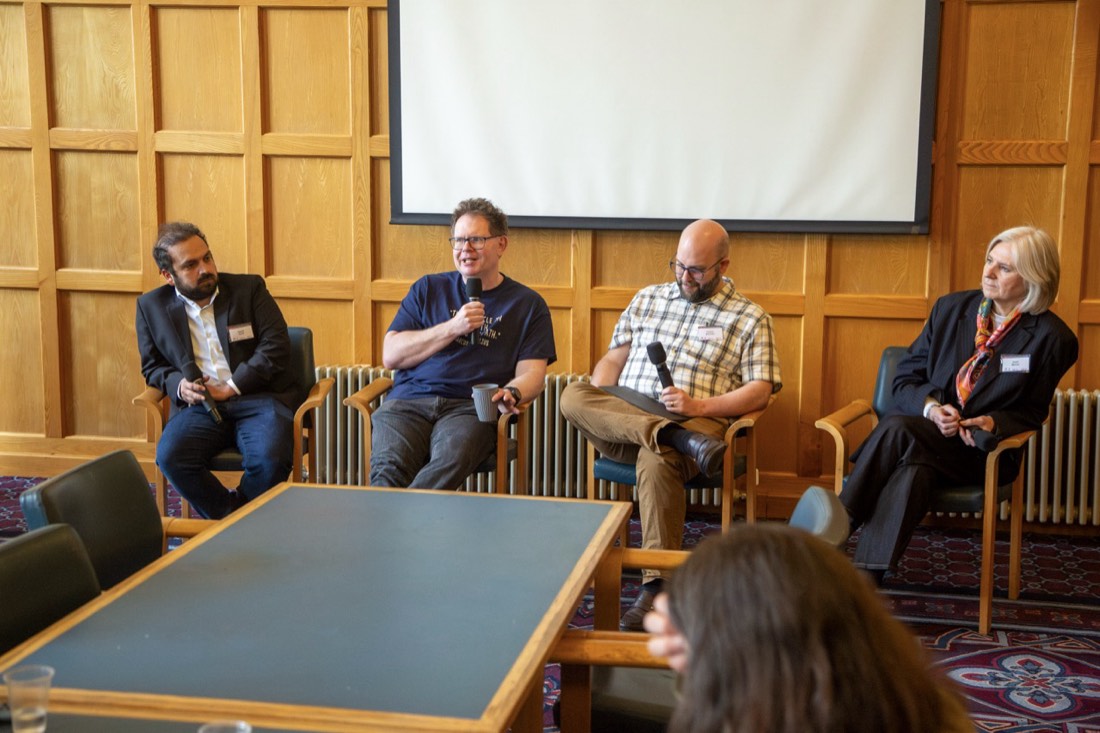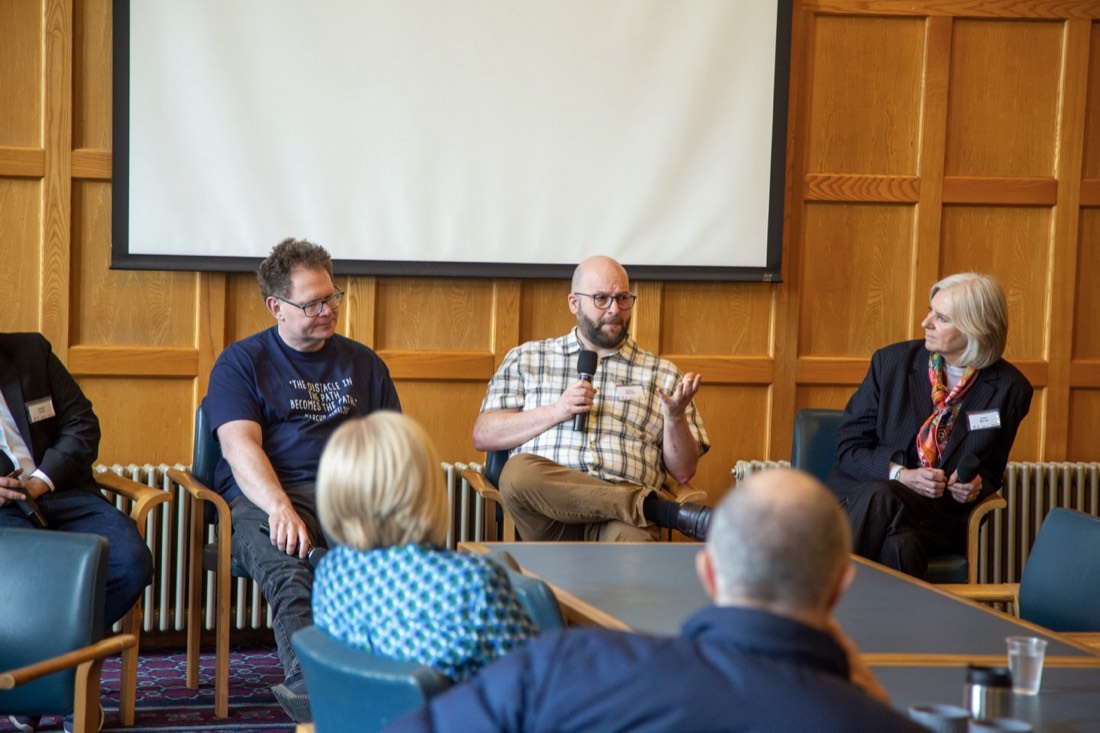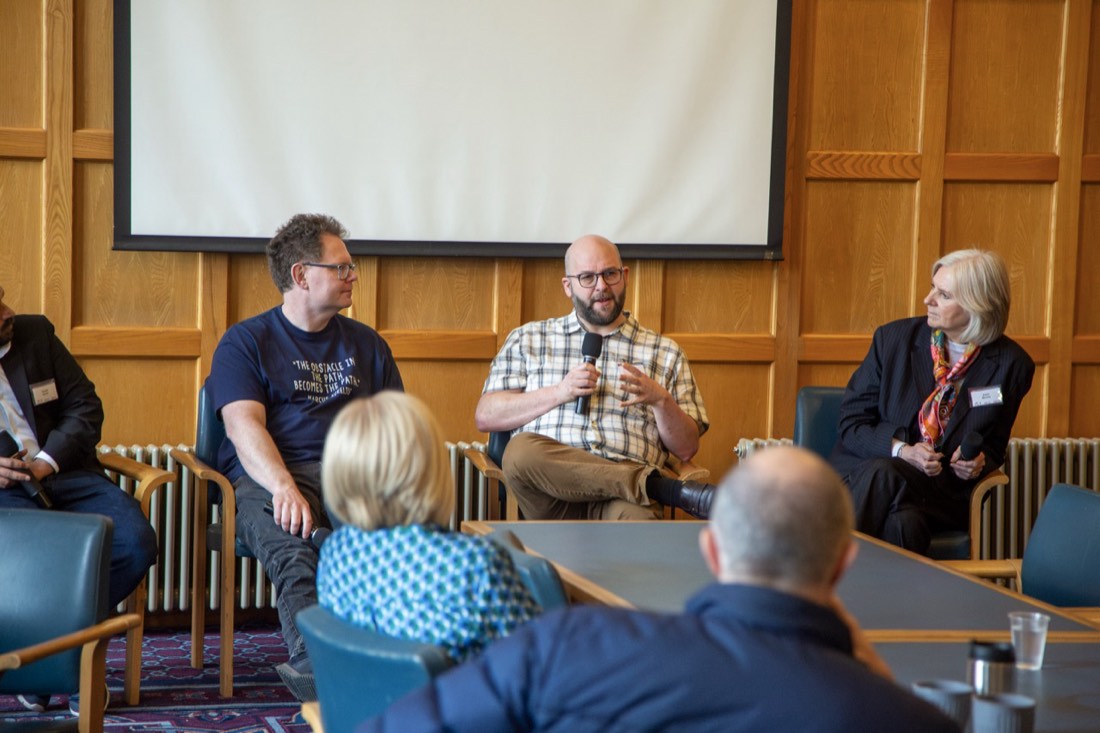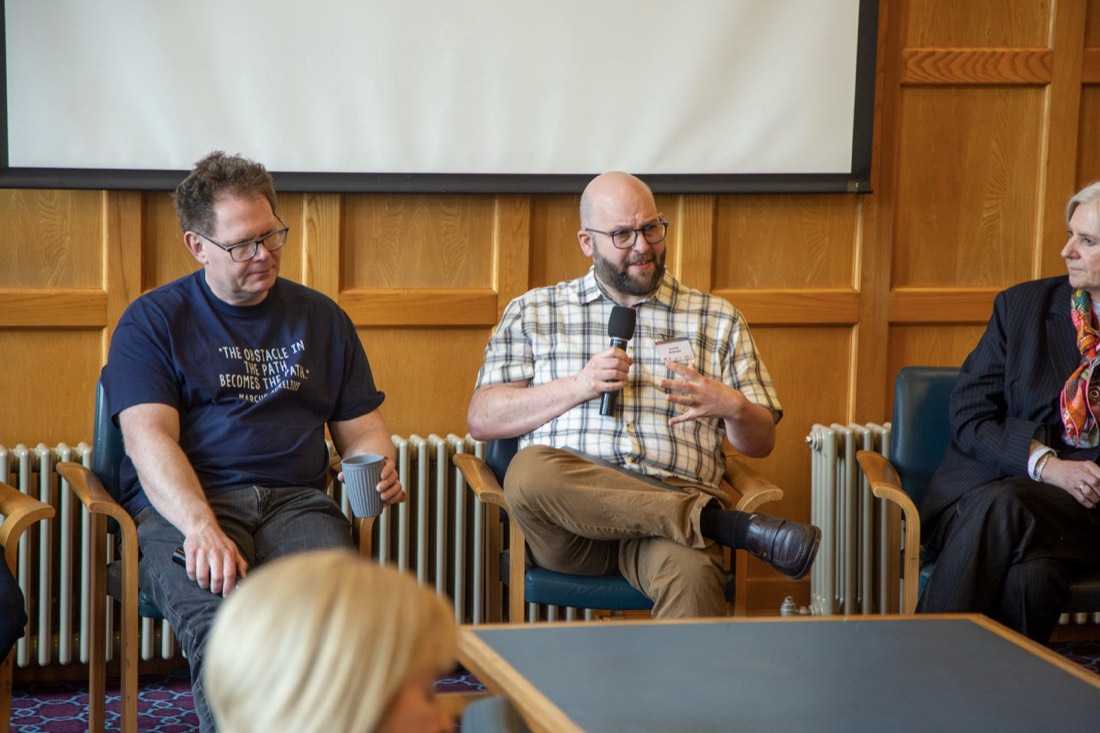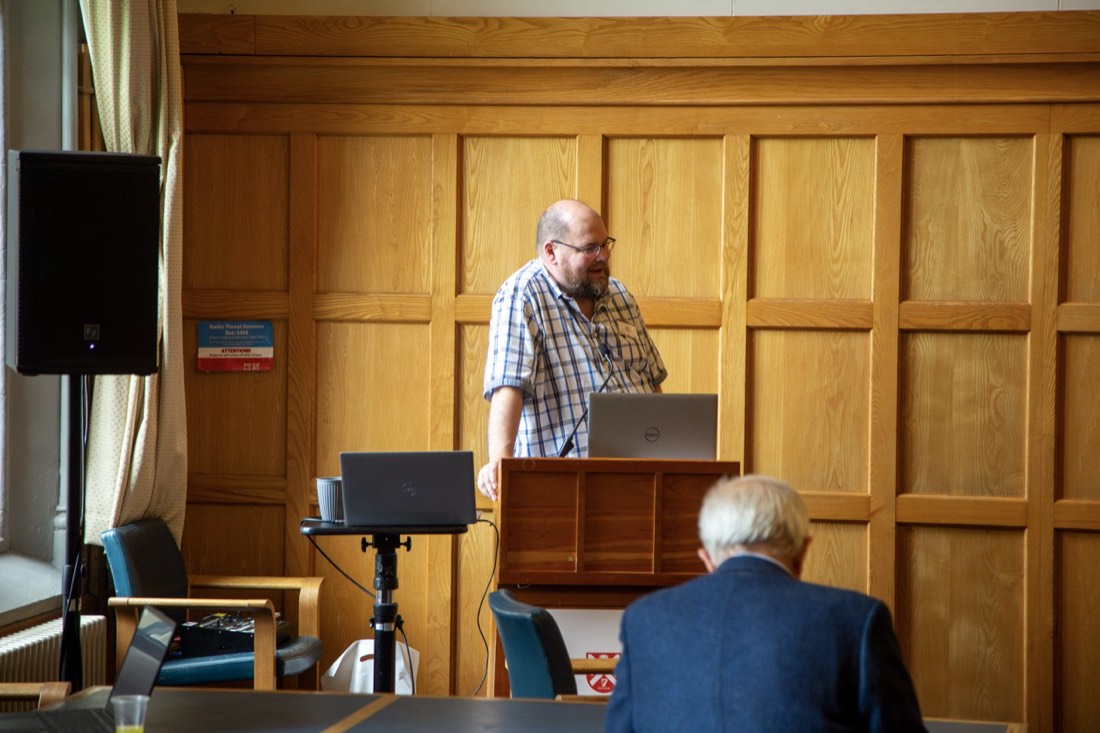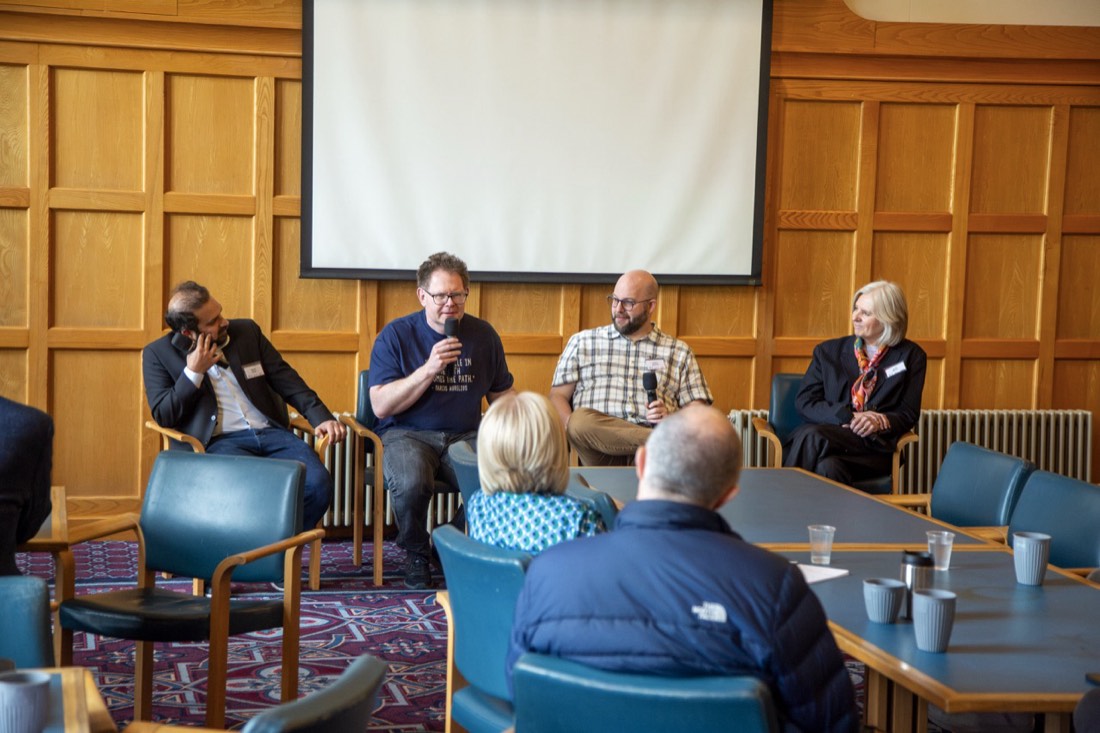

First of all, I wish to thank Drs Dave Cutting and Neil Anderson of the School of Electronics, Electrical Engineering and Computer Science together with Professor Andrew McDowell from the Centre for Education and Society for organising this conference on the future of computer science education at QUB today.
I came here today with many questions, hoping to find answers, but instead I'm going away with even more questions. But that's OK: it has given us time to think more deeply about change for the future.
In his opening remarks, Professor McDowell said “we have been here before” with technology. My immediate thought was, yes we have, and we keep making the same mistakes, only just faster and faster! Humanity has always had a complicated relationship with technology, and it takes us time to reassert human agency.
In her opening speech, Joanne McGovern introduced the concepts of Scaffold or Substitute as a way of thinking about how learners are independently reinventing the way they learn through their use of artificial intelligence. I couldn't help thinking, in this time of school curriculum reform, that the concepts of Scaffold or Substitute also apply to the emerging new curriculum, and especially to the subject of Digital Technology. Will the new curriculum be a scaffold by helping to build teacher capacity, or will it be a substitute, delivered complete without teacher engagement?
And, as a result of today's presentations, I'm still trying to work out how much of the Digital Technology curriculum in schools relates to Computer Science and how much to Software Engineering in the tertiary sector.
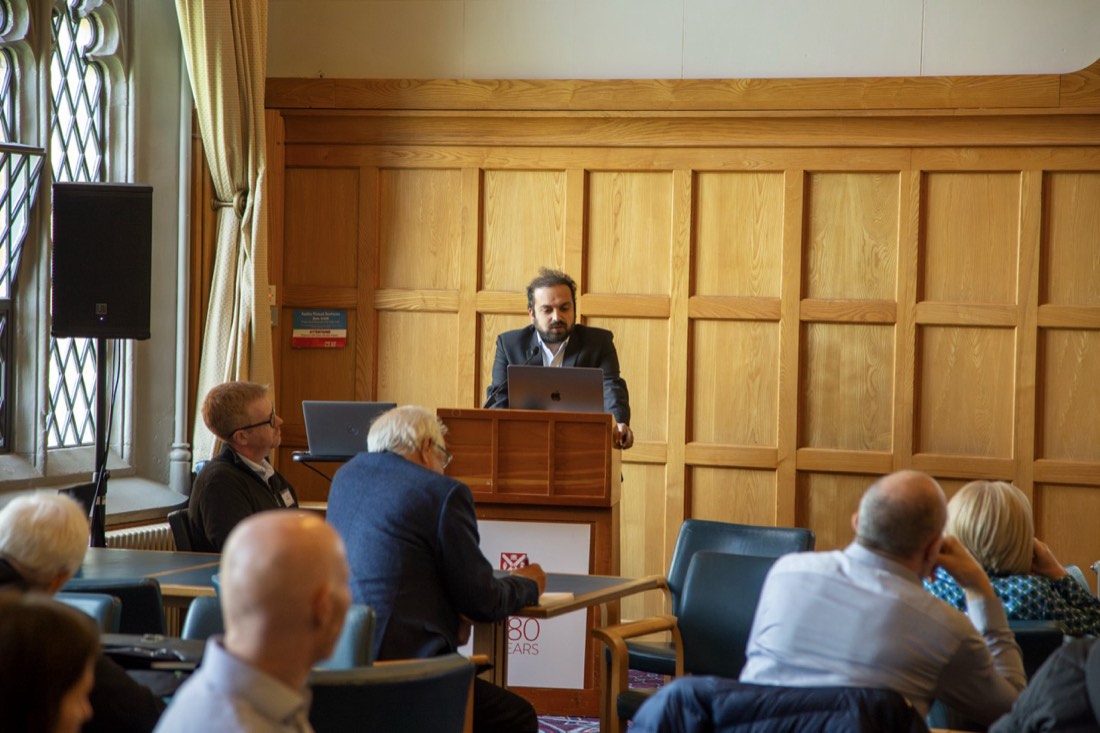
Dr Rashid Kamal from Ulster University Computer Science caught my attention with his comment that AI capability is moving faster than curriculum revision. It's sobering to think that it takes five years to develop a new HE course. Today, Peter Hutchinson from the Department of Education told me it could take six years to revise the school curriculum, so I'm left wondering how digital technology in schools will keep pace with the rapid changes in the technologies. Avril Morrow will forgive me for saying that despite the excellent job she, Dave Cutting and their colleagues did in drafting the outline programme for digital technology, it was out of date the day after they finished. What will it be like in September 2028, the Minister’s chosen date for implementing the revised curriculum? At present, it does not, for example, include references to quantum computing. We can't teach children about bytes and bits without teaching them about qubits. It doesn’t mention vibe coding and makes no reference to agentic AI, let alone GAI.
We could risk teaching children about the parts of technology, without giving them the opportunity to combine them and put them to work for creative purposes.
My next reflection relates to qualifications. What kind of new qualifications are we going to need to ease the transition from school to tertiary education? Northern Ireland is unique in having Software Systems Development as a GCSE and A level designed in response to the expressed needs of the software industry here. It also has GCSE and A levels in Digital Technology, with the choice of either multimedia or systems programming options. We provide an occupational qualification in Computer Studies and Northern Ireland is also unique in having Moving Image Arts, a qualification which underpins the development of the screen industries in Northern Ireland, together with the significant investments of Northern Ireland Screen to build the successful film and TV industry. There are many diverse career pathways for young people who have digital and AI knowledge and skills. Very little is known about the Northern Ireland space industry for example and the many jobs there.
I was sharing also with Michael McEnery from CCEA the more fundamental challenge of change needed in assessment. Joanne McGovern this morning referred to the proposal to reduce and remove coursework from public examinations. A reform concept introduced by Michael Gove in England, and perhaps now part of the Givian, rather than the Govian curriculum.
Joanne McGovern had a quotation on her slide this morning which said: “We need digitally competent learners who can judge, question and create.” Dr Rashid Kamal also said, while talking about coding but it applies equally to learning, that young people need “to explain, to verify and to defend” their work. Written exam answers can’t easily test that. Can we develop, at scale, a viva type assessment that would work for all young people in schools so that we protect their instinct for curiosity, which lies at the heart of their learning.
Reform raises many challenges and many questions. Thank you for giving us the opportunity to think deeply about several of them today.
When I worry about them, I remind myself of a quotation from the Italian novel The Leopard published in 1958 by Giuseppe Tomasi di Lampedusa who said “If we want things to stay as they are, things will have to change”
And with that thought, I wish you well. Thank you all for coming.